When Anxiety Lives in Your Body: What to Do When Thinking It Through Isn't Enough
When we think about anxiety, we tend to think about our thoughts: the worrying, the overthinking, and the mental lists of everything that could go wrong. But anxiety doesn't always look like this.
Sometimes, it looks like a clenched jaw, tense shoulders, or a stomach that feels unsettled for no obvious reason. You might feel restless even when you have nothing pressing to do, or find yourself struggling to relax despite knowing that everything is okay.
This is something I think about often in my work as a therapist and yoga teacher. We tend to approach anxiety as a problem to solve with our minds, which makes sense. A lot of anxiety does involve worrying, overthinking, and getting caught up in patterns of thought that aren't particularly helpful.
But sometimes, the thoughts aren't the whole story.
If you understand your anxiety intellectually but still experience it physically, it may be worth exploring a more body-based approach alongside the cognitive work. That doesn't mean talk therapy isn't working or that you need to stop trying to understand your patterns. It means there may be another part of the experience worth paying attention to.
What Does Anxiety Look Like in the Body?
When we talk about physical anxiety symptoms, we're talking about the ways stress and anxiety can affect our bodies, sometimes without us immediately recognizing the connection.
Anxiety can show up as a racing heart, shallow breathing, muscle tension, digestive discomfort, restlessness, or difficulty sleeping. You might clench your jaw while working, hold your breath when you're concentrating, or feel physically exhausted after spending the day on edge.
These experiences are connected to the body's stress response. When we perceive a threat or experience stress, our bodies can become more activated. Heart rate and breathing may change, muscles may tighten, and digestion can be affected.
The tricky part is that we don't always consciously feel worried when these responses happen. You might be sitting at your desk doing something relatively ordinary while noticing that your shoulders are tense or your breathing feels restricted. You might finally have a free evening but find that you can't settle down.
Sometimes, these physical responses become so familiar that we stop noticing them. We assume we're just tense people, that our stomachs are always going to be sensitive, or that struggling to relax is part of being busy.
When you've recognized a pattern between stress and what happens in your body, that pattern can be useful information. The question becomes what we can do with it.
When Understanding Your Anxiety Isn't Enough
One of the frustrating things about anxiety is knowing something logically but not feeling it physically.
You might know that a situation isn't dangerous, recognize that you're overthinking, or understand why a particular experience brings up stress. And yet, your body still feels tense or activated.
This doesn't mean you're doing something wrong or that you haven't made progress. It may simply mean that understanding your thoughts is one part of the process, and you could benefit from additional ways of responding to what you're experiencing.
This is where somatic approaches can be helpful. Rather than focusing exclusively on the content of your thoughts, somatic work also brings attention to physical sensations, movement, breathing, and how you respond to stress in the moment.
What Does It Look Like to Work With Anxiety Through the Body?
Somatic work doesn't have to be complicated. It can start with noticing what's happening physically without immediately trying to change it.
For example, you might pause and notice that your shoulders are raised, your breathing is shallow, or your stomach feels tight. Instead of judging the sensation or trying to make it go away, you practice getting curious about it.
From there, you might experiment with a few different tools:
Grounding: Noticing your feet on the floor or the support of the chair beneath you can help bring your attention back to the present moment.
Breathwork: Slowing your breathing or gently lengthening your exhale may help you settle when you're feeling activated.
Movement: Stretching, walking, or moving in a way that feels comfortable can offer another way to work with tension and restlessness.
Mindfulness: Practicing awareness of physical sensations, thoughts, and emotions without immediately reacting to them can help you recognize patterns over time.
These tools aren't about forcing yourself to relax. They're opportunities to explore what helps you respond to anxiety with a little more awareness and flexibility. What works for one person might not work for another, and some practices can feel uncomfortable when anxiety is high. It's okay to adjust or stop and find a different approach.
A Note on Yoga and Somatic Practices
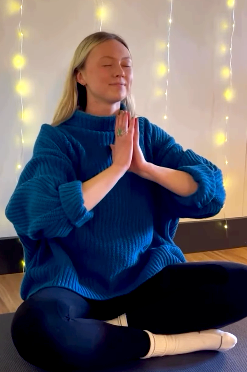
As a therapist and yoga teacher, I'm especially interested in how mindfulness and body-based practices can complement traditional talk therapy.
Yoga can offer opportunities to notice physical sensations, recognize tension, and practice staying present with discomfort in manageable ways. You don't have to be flexible, experienced with yoga, or comfortable with meditation to benefit from body awareness.
And you don't need to do yoga at all to explore somatic tools. Sometimes the most useful starting point is as simple as noticing your breath or taking a moment to feel your feet on the ground.
The goal isn't to become perfectly calm or eliminate anxiety. It's to develop a better understanding of your responses and discover additional ways to support yourself when anxiety shows up.
Working With Anxiety at Middle Way Wellness
If anxiety feels like it's taking up space in both your mind and your body, you don't have to figure it all out on your own.
If you're interested in exploring a somatic approach to anxiety, I'd love to connect. I offer individual therapy at Middle Way Wellness in Ferndale and virtually throughout Michigan, integrating mindfulness, somatic awareness, and self-compassion into our work together.
Schedule a free 15-minute consultation with Caitlin
Frequently Asked Questions
Can anxiety cause physical symptoms even when I'm not feeling worried?
Yes. Anxiety and stress can involve physical responses even when you're not consciously experiencing worry. You might notice muscle tension, changes in breathing, digestive discomfort, or restlessness without immediately connecting these sensations to anxiety. Physical symptoms can also have other causes, so it's important not to automatically assume anxiety is responsible.
What is somatic therapy for anxiety?
Somatic therapy incorporates awareness of bodily sensations and physical responses into therapeutic work. Depending on the person and approach, this might include grounding, mindfulness, breathing, movement, and noticing patterns in how stress shows up physically.
Do I need to practice yoga to benefit from somatic therapy?
No. Yoga is one way to explore body awareness, but it isn't a requirement. Somatic work can involve simple, everyday practices that are adapted to your comfort level and needs.